
Getting started
How to breathe in pilates: a guide to lateral breathing
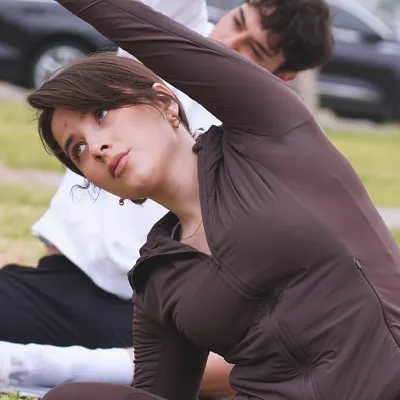
In short: Breathing is one of the six classic pilates principles and the one most emphasised in research. Pilates usually uses "lateral breathing": you breathe into the sides and back of the rib cage while keeping gentle support in the abdominal muscles. The aim is not to hold your breath but to breathe comfortably in time with the movement.
In the first pilates classes, what people find hardest is often not the movement but the breathing. "When was I meant to breathe in?" is a completely normal question. Here we explain why breathing matters in pilates and how we practise it.
Why does breathing matter in pilates?
Joseph Pilates' method has six classic principles: centring, concentration, control, precision, flow and breathing. A review of 119 scientific papers found breathing was the principle most consistently discussed. The same review describes pilates as a mind-body exercise focusing on strength, core stability, flexibility, muscle control, posture and breathing.
Breathing does three jobs in pilates:
- It sets the rhythm: it guides the speed and flow of the movement.
- It supports the centre: the deep abdominal muscles engage more easily as you breathe out.
- It focuses you: it brings your attention to your body and the movement.
What is lateral breathing?
In everyday life, the belly may push forward when we breathe in. In pilates, you keep light support in the abdominal muscles and breathe into the sides and back of the rib cage. The ribs open sideways like an umbrella and draw back together as you breathe out.
Try it step by step
- Sit comfortably or lie on your back; place your hands on the sides of your ribs.
- Breathe in through your nose and feel your ribs push your hands outwards. Don't let your shoulders rise towards your ears.
- Breathe out through your mouth, as if slowly blowing out a candle; feel your ribs draw together and your belly gently draw in.
- Repeat 5–8 times. If you feel dizzy, pause and return to normal breathing.
The rule is simple: don't hold your breath. You usually breathe out on the hardest part of a movement.
How does breathing match movement?
As a general rule, you breathe out at the point of greatest effort (for example pushing the reformer carriage out or lifting the trunk) and breathe in during preparation and return. This is not a fixed rule; for some movements the reverse feels more natural. Your instructor will cue the breath for each movement. Mixing it up in the first classes is very normal and it settles within a few weeks.
Effects on the breathing muscles
Small studies report that regular pilates may increase respiratory muscle strength and abdominal muscle thickness. In one 8-week study of 16 sedentary women, respiratory muscle strength and deep abdominal muscle thickness increased. That study had no control group, so the results should be read with caution.
Note: if you have asthma, COPD or another breathing or heart condition, talk to your doctor before starting and let your instructor know.
Breathing in your first class at Studio 4
In the first class we practise breathing together before the movements; with no more than 3 people per class we can follow your breath and shoulders closely. We explain how breathing relates to the core in our core article.
Frequently asked
Do you breathe through the nose or mouth in pilates?
Usually in through the nose and out through the mouth. Most important is not holding your breath and finding a comfortable rhythm.
Is lateral breathing better than belly breathing?
Neither is better; they serve different purposes. Pilates favours lateral breathing because it makes it easier to breathe while keeping abdominal support.
I can't get the breathing right. Is that a problem?
No. It is very normal in the first classes. As long as you are not holding your breath while you focus on the movement, you are on the right track.