
Getting started
8 things to know before your first pilates class
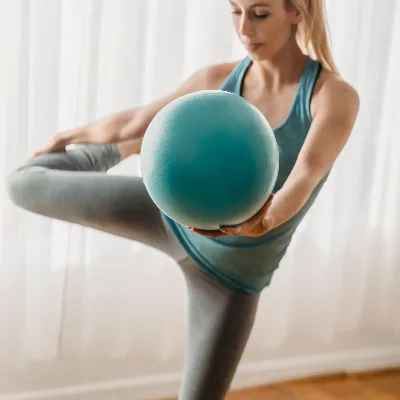
In short: Comfortable, close-fitting clothes, non-slip socks and a bottle of water are all you need. Don't eat a heavy meal 1–2 hours before class, tell the instructor about your health history and don't expect to be perfect in your first class.
1. Wear comfortable, close-fitting clothes
Loose clothes slide around as you move and make it harder for the instructor to see your posture. Leggings or flexible joggers and a close-fitting top are ideal.
2. Bring non-slip pilates socks
Pilates is done barefoot or in socks with non-slip soles. On the reformer, keeping your feet from slipping matters for safety.
3. Don't come straight after a heavy meal
Pilates works the abdominal area intensively. A heavy meal 1–2 hours before class can cause discomfort; a light snack is enough.
4. Tell the instructor about your health history
Share conditions such as back, neck or knee problems, past surgery, pregnancy or the postnatal period before class. If necessary, check with your doctor first.
5. Arrive a few minutes early
Arriving early gives you time to get to know the studio and have a short chat with the instructor. A first class that starts calmly is more productive.
6. Focus on your breathing
In pilates, breathing is part of the movement. Matching breath to movement may feel hard in your first class; that's completely normal and it settles in after a few classes.
7. Don't expect to be perfect
Pilates movements are small but precise. In the first classes the goal is to learn the correct technique, not to repeat a movement many times.
8. Mild muscle soreness the next day is normal
Because you are working muscles you haven't used before, you may feel mild soreness for 1–2 days. If you have sharp or persistent pain, tell your instructor and, if necessary, your doctor.
What to pack in your bag
Pilates mats and equipment such as balls and bands are ready at the studio. Taking off jewellery, watches and other accessories that could catch during movement, and tying back long hair, also makes the class more comfortable.
What happens in class?
- Introduction: We talk about your goals, the sports you've done before and any sensitive areas.
- Breath and centre: You learn the breathing work that underpins pilates and how to activate your core.
- Basic movements: With simple movements suited to your level, we see together how your body works.
- Wrap-up and plan: At the end of the class we discuss the class format (private, duo or trio) and frequency that suit you.
A few terms you'll hear in class
Centre (powerhouse)
The area formed by the abdominal, lower back, hip and pelvic floor muscles. Most pilates movements start here.
Neutral spine
A posture in which the spine keeps its natural curves, neither too flat nor too arched.
Reformer
A pilates machine made of a sliding platform, a footbar and springs. The springs provide both resistance and support.
Control
Performing a movement by feeling each stage of it, not quickly or by swinging. This is why the founder of pilates called his method "Contrology".
At Studio 4 Pilates we plan your first class as an introductory class. If you're new, a private class or a duo class is the most comfortable start.
Frequently asked
What happens in a first pilates class?
Usually an introduction, a conversation about your goals, learning the basic principles of breathing and the core, and basic movements suited to your level.
Can I eat before pilates?
Finishing a heavy meal 1–2 hours before class, and having only something light right before, makes for a more comfortable class.
Are pilates socks a must?
You can work barefoot, but socks with non-slip soles are more comfortable for safety and hygiene, especially on the reformer.
What if I struggle in my first class?
That's no problem at all. Movements are made easier to suit your level; the aim of the first classes is to learn the technique, not to push yourself.