
Getting started
What is the core? What does the pilates "powerhouse" mean?
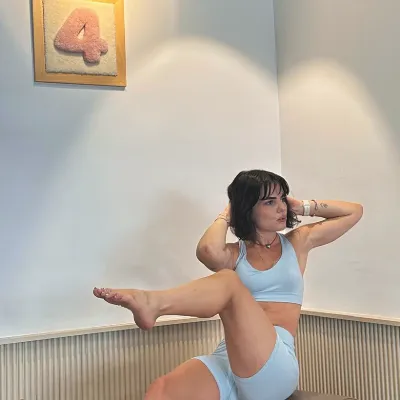
In short: The core is not just the "six-pack": it is a system in which the deep abdominal muscles, back muscles, diaphragm, pelvic floor and hip muscles work together. In pilates this is called the "powerhouse". One meta-analysis found core training reduced low back pain slightly more than general exercise in the short term, but what matters most is a regular programme that suits you.
"Engage your core", "use your centre": you will hear this a lot in pilates classes. So what exactly is the core, and why does it matter so much? Here is a short, clear explanation.
Which muscles make up the core?
Think of the core as a box:
- Front and sides: the deep abdominal muscle (transversus abdominis), the internal and external obliques and, on the surface, the rectus abdominis.
- Back: the back muscles running along the spine and the small deep spinal muscles (multifidus).
- Top: the diaphragm, your main breathing muscle.
- Bottom: the pelvic floor muscles.
The muscles around the hips work with this system too. Their job is not just to move you but to keep the trunk stable and balanced while the arms and legs move.
What does "powerhouse" mean in pilates?
Joseph Pilates called the area covering the abdomen, lower back, hips and pelvic floor the "powerhouse". Almost every pilates movement starts here: the centre is stabilised first, then the arms and legs move. Scientific literature also describes pilates as a mind-body exercise focusing on strength, core stability, flexibility, muscle control, posture and breathing.
A strong core is not a hard, clenched belly; it is smart support that switches on when you need it.
Does core training help low back pain?
Core versus general exercise
A meta-analysis of 5 studies and 414 participants found core stability exercise reduced pain and disability in chronic low back pain slightly more than general exercise in the short term. Long-term differences are unclear.
Comparing exercise types
In a network meta-analysis of 89 studies, pilates had the highest probability of being the most effective exercise for reducing pain in chronic low back pain, while resistance and stabilisation exercise stood out for improving function.
The results suggest core-focused work makes sense, but the broader message is that any suitable, regular exercise is much better than inactivity. For research on back pain, see this article.
Common myths about the core
- "Core = crunches": crunches mainly work the surface abdominal muscle. Core training includes the deep muscles, breathing and trunk control.
- "Always suck your belly in": you don't need to hold your abdomen tight all day; it can even restrict breathing. What matters is switching on when needed.
- "A strong core burns belly fat": core training does not burn fat locally. We cover weight in this article.
Core work at Studio 4 Pilates
In our classes we train the core together with the breath; the reformer, Ladder Barrel and Chair challenge the centre from different angles. For breathing technique, see our breathing guide.
Frequently asked
How many weeks does it take to strengthen the core?
Changes in strength are usually felt after a few weeks of regular work; research programmes mostly last 6–12 weeks.
Does pilates build abs?
Pilates strengthens the abdominal and trunk muscles. How visible they are depends largely on body fat.
Can I do core work after giving birth?
After your medical check-up, starting with the pelvic floor and breathing. See our pregnancy and postpartum article for details.
Sources
- Wells C, Kolt GS, Bialocerkowski A. Defining Pilates exercise: a systematic review. Complement Ther Med, 2012
- Wang XQ et al. A meta-analysis of core stability exercise versus general exercise for chronic low back pain. PLoS One, 2012
- Owen PJ et al. Which specific modes of exercise training are most effective for treating low back pain? Network meta-analysis. BJSM, 2020