
Posture
Scoliosis and pilates: how much does it help, and what to watch for
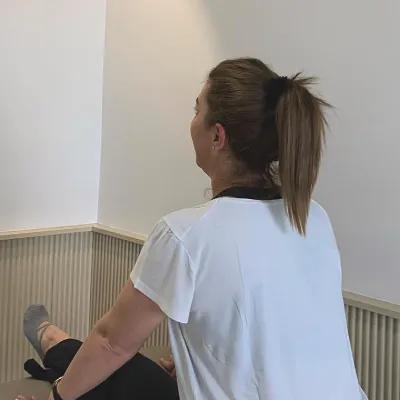
In short: Scoliosis is a three-dimensional sideways curve of the spine that needs medical follow-up. For growing children and teenagers, international guidelines recommend scoliosis-specific physiotherapy exercises (such as Schroth) and bracing when needed. Evidence that pilates changes the curve is "very limited", but it may help with postural asymmetry, flexibility and pain in people with mild scoliosis and a low risk of progression.
Many people diagnosed with scoliosis ask: "Can I do pilates, and will it help?" To answer properly, we first need to know what scoliosis is and what treatment guidelines recommend.
Please note: pilates does not replace scoliosis treatment. Especially for growing children and teenagers, decisions about follow-up and treatment belong to an orthopaedic specialist. Before working with someone with scoliosis, we like to know their latest X-ray findings and their doctor's advice.
What is scoliosis?
Scoliosis is a sideways curve of the spine combined with rotation around its own axis. The size of the curve is described by the Cobb angle, measured on an X-ray. The most common type has no known cause (idiopathic) and is usually noticed in adolescence. There are also non-structural, flexible curves related to factors such as a leg-length difference or muscle imbalance.
What do international guidelines recommend?
The 2016 guidelines of SOSORT, the international society for conservative scoliosis treatment, highlight physiotherapeutic scoliosis-specific exercises (methods such as Schroth) and, when needed, bracing to prevent progression during growth. The guidelines also support continuing general sports activities.
How effective is pilates for scoliosis?
Limited evidence
A 2023 scoping review concluded that the level of evidence for pilates on scoliosis-related deformity is "very limited". The authors suggest pilates may help reduce postural asymmetry in people with mild scoliosis, reduced growth potential and a low risk of progression.
Compared with Schroth
In a small study, both Schroth and pilates changed the Cobb angle, but Schroth was more effective. A study combining Schroth and pilates reported improvements in the curve, trunk rotation and quality of life.
Pilates is not an alternative to scoliosis-specific exercise; for the right person it can be a complement.
What should people with scoliosis watch for in pilates?
- Medical approval: start on the advice of a doctor who knows your curve and its risk of progression.
- An individual programme: every curve is different; you need movements chosen for you rather than a standard group class.
- Don't force symmetry: the aim is not to straighten the spine by force but to lengthen, use the breath and work muscles evenly.
- Listen to pain: stop if you feel sharp or spreading pain.
- If you wear a brace: think of exercise alongside bracing, not instead of it.
Working with scoliosis at Studio 4 Pilates
We work with students who have scoliosis in private classes. Equipment such as the barrel, Spine Corrector and Cadillac reformer supports the spine and makes lengthening and breathing work easier. We build the programme taking your doctor's advice into account. For posture in general, see this article.
Frequently asked
Can pilates fix scoliosis?
Evidence that pilates corrects the curve is very limited. In mild scoliosis it may help with posture, flexibility and pain; your doctor decides on treatment.
Can a child with scoliosis do pilates?
For growing children, the priority is the scoliosis-specific exercise and, if needed, bracing recommended by their doctor. Pilates should only be considered as a complement, with medical approval.
Is the reformer suitable for scoliosis?
It can be, because the reformer and other equipment can support movement; exercises should be chosen for the person's specific curve.
Sources
- Negrini S et al. 2016 SOSORT guidelines: orthopaedic and rehabilitation treatment of idiopathic scoliosis during growth. Scoliosis Spinal Disord, 2018
- Kuru Çolak T, Akçay B, Apti A. Effects of Pilates exercises on idiopathic scoliosis: a scoping review of the literature. Spine Deformity, 2023
- Kim G, HwangBo PN. Effects of Schroth and Pilates exercises on the Cobb angle and weight distribution of patients with scoliosis. J Phys Ther Sci, 2016
- Rrecaj-Malaj S et al. Outcome of 24 Weeks of Combined Schroth and Pilates Exercises in Adolescents with Idiopathic Scoliosis. Med Sci Monit Basic Res, 2020