
Posture
Rounded upper back (kyphosis) and pilates: does exercise help?
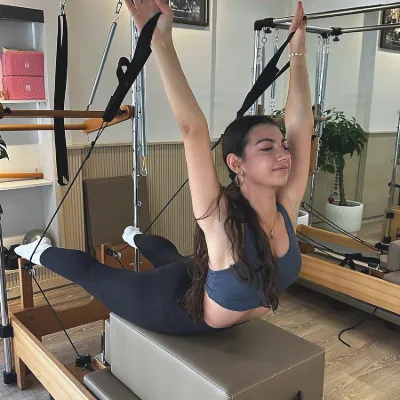
In short: A marked forward rounding of the upper back is called hyperkyphosis. Systematic reviews suggest exercise can improve the kyphosis angle in both young people and older adults, though the evidence is of moderate quality. Pilates movements that strengthen the back, open the chest and build postural awareness match what these programmes include.
When you look at yourself side-on in the mirror, do your shoulders drop forward and your upper back look rounded? This is very common. Here we explain what a rounded upper back is, what exercise can do, and where pilates fits.
Please note: this article is for information only. If the rounding is increasing quickly, comes with pain, or is marked in a child or teenager, see an orthopaedic or rehabilitation specialist. Sudden back pain with loss of height may be a sign of a spinal fracture.
What are kyphosis and hyperkyphosis?
A gentle outward curve in the upper (thoracic) spine is normal; this is kyphosis. When the curve increases markedly (research often uses 40 degrees or more), it is called hyperkyphosis, or a rounded upper back.
- Postural kyphosis: common in young people, linked to long hours slumped forward and weak back muscles; usually flexible.
- Scheuermann's disease: a teenage condition with structural changes in the vertebrae that needs medical follow-up.
- Age-related kyphosis: may increase with loss of muscle strength, disc changes and sometimes fractures related to osteoporosis.
Can exercise reduce the rounding?
Teenagers and young adults
A 2025 review of 9 randomised trials reported improvements in the kyphosis angle with programmes including stretching, strengthening, core stabilisation and breathing exercises. One of the studies was a 38-week pilates programme. Evidence quality was fair to good.
Adults over 45
In a 2014 review, 8 of 13 studies showed improvement in at least one posture measure. The authors said the data were not enough to pool, but positive results in higher-quality studies suggest some benefit.
The shared message: strengthening the back and opening the chest is the most sensible place to start.
What does pilates offer for a rounded upper back?
- Back extension: movements such as swan, back extension on the reformer box and chest opening on the Spine Corrector work the muscles that lengthen the spine backwards.
- Shoulder-blade control: arm work with straps strengthens the muscles that set the shoulders back and down.
- Chest and shoulder flexibility: stretching tight chest muscles makes it easier to stand tall.
- Breathing: breathing wide into the sides of the rib cage supports upper-back mobility.
The UK consensus statement on osteoporosis also recommends spinal extension exercise to improve posture, and advises people with osteoporosis to avoid positions involving a high degree of forward bending. We cover this in our osteoporosis and pilates article.
Small changes in daily life
- Bring your phone closer to eye level and avoid looking down for long periods.
- Use a chair that supports your back and get up often.
- Try not to carry bags and heavy loads on one shoulder.
How we work at Studio 4 Pilates
With students who come in with a rounded upper back, we assess posture together in the first class and listen to any advice from their doctor. Equipment like the Cadillac reformer, Ladder Barrel and Spine Corrector makes back extension and chest opening much easier. We recommend starting with private classes. For general posture, see our poor posture article.
Frequently asked
Can a rounded upper back be fully corrected?
Postural, flexible rounding can improve noticeably with exercise. When kyphosis has structural causes, the aim is to slow progression and keep function; discuss this with your doctor.
What is the best pilates exercise for kyphosis?
There is no single exercise. A programme combining back extension, shoulder-blade control and chest stretches works better.
Can teenagers do pilates?
Yes, at an appropriate age and with an instructor. If there is a structural condition such as Scheuermann's disease, a medical assessment comes first.
Sources
- Fernández Fernández L et al. Effect of Therapeutic Exercise on the Management of Hyperkyphosis in Adolescence and Young Adulthood: A Systematic Review. Physiother Res Int, 2025
- Bansal S, Katzman WB, Giangregorio LM. Exercise for improving age-related hyperkyphotic posture: a systematic review. Arch Phys Med Rehabil, 2014
- Brooke-Wavell K et al. Strong, steady and straight: UK consensus statement on physical activity and exercise for osteoporosis. BJSM, 2022