
Health
Pilates for knee pain: does it help knee osteoarthritis?
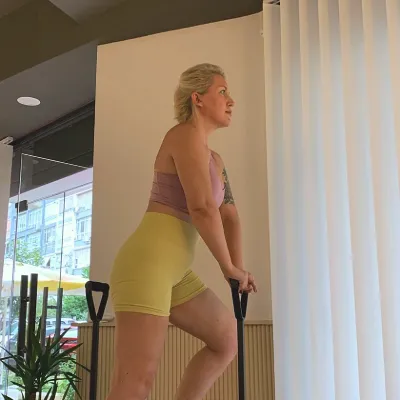
In short: The international OARSI guideline lists structured exercise as a core treatment for knee osteoarthritis. Small randomised trials report that pilates improves pain and function in people with knee osteoarthritis. Its advantage is that it lets you strengthen the hips, thighs and core without overloading the knee.
Knee pain, especially osteoarthritis, is a common reason people avoid exercise. Current guidelines say the opposite: well-chosen exercise is one of the core treatments for knee osteoarthritis.
Please note: if your knee is swollen, red, locks or gives way, or the pain started after an injury, see your doctor before exercising. This article is for information only.
What do guidelines say?
The 2019 guideline from OARSI, the international osteoarthritis research society, lists education about the condition and structured land-based exercise (with weight management where needed) as core treatments for knee osteoarthritis. These programmes include strengthening, cardio, balance and mind-body exercise.
How effective is pilates for knee pain?
Pilates and conventional exercise
In a randomised trial with 41 people with knee osteoarthritis, both the pilates and conventional therapeutic exercise groups improved compared with control; the pilates group improved more in pain and disability.
Mat pilates
Another randomised trial in women with knee osteoarthritis reported that mat pilates twice a week improved pain, stiffness and function.
These studies are small, but their results fit the guideline recommendation to exercise.
Protecting the knee often means strengthening not the knee itself but the hips and thighs.
Why can pilates suit the knee?
- Low impact: no jumping or sudden loading.
- Adjustable load: in movements like footwork on the reformer, springs let you increase the load on the knee gradually.
- Hips and thighs: it strengthens the hip and thigh muscles that support the knee.
- Alignment: attention to keeping the knee in line with the foot and hip.
- Balance: the Chair and standing work improve balance and control.
What do we watch for to protect the knee?
- We monitor pain: mild, short-lived discomfort is acceptable; an increase that lasts into the next day tells us to ease the programme.
- We adapt deep knee bending and positions that put weight directly on the knee when needed.
- We increase load and repetitions slowly over weeks.
Working with knee pain at Studio 4 Pilates
Our instructor Nazlı Bendeş has completed TO Pilates Academy's training on knee biomechanics and alignment problems. With students who come in with knee pain, we assess movement and alignment together in the first class and start with private classes. For exercise at older ages, see this article.
Frequently asked
Can people with knee osteoarthritis do pilates?
Most can; exercise is one of the core treatments recommended by guidelines. Talk to your doctor before starting and tell your instructor about your condition.
Can I do pilates after knee surgery?
After surgery the priority is the rehabilitation programme from your doctor and physiotherapist. Once they approve, pilates can be a good next step.
If my knee hurts, reformer or mat?
The reformer is often more comfortable at first because the load can be adjusted; kneeling positions on the mat need adapting.
Sources
- Bannuru RR et al. OARSI guidelines for the non-surgical management of knee, hip, and polyarticular osteoarthritis. Osteoarthritis Cartilage, 2019
- Mazloum V et al. The comparison of the effectiveness of conventional therapeutic exercises and Pilates on pain and function in patients with knee osteoarthritis. Complement Ther Clin Pract, 2018
- Rêgo TAM et al. Effects of mat Pilates on older adult women with knee osteoarthritis: A randomized controlled trial. J Bodyw Mov Ther, 2023