
Getting started
Is there an age limit for starting pilates?
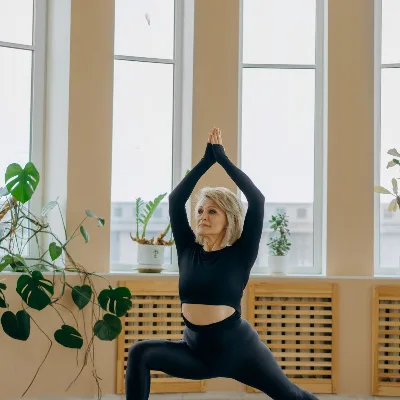
In short: There is no upper age limit for starting pilates. Because movements can be adapted to each person's level, you can start at 40, 50, 60 and beyond. Research shows that for people over 60, pilates can support balance, muscle strength and mobility in daily life. If you have a chronic health condition, check with your doctor before starting.
The answer to "Can I start pilates at my age?" is usually yes. Pilates is an exercise method of slow, controlled movements that don't require sudden jumps or heavy loads. Because almost every movement can be made easier, it can be adapted to different ages and fitness levels.
Why does it matter more as we age?
With age, muscle mass and balance naturally start to decline. This can make everyday tasks such as climbing stairs, picking something up from the floor or keeping your balance harder. That's why the World Health Organization recommends that adults aged 65 and over, in addition to the standard recommendations, do multicomponent activities that work balance and muscle strength together on at least 3 days a week. The aim is to prevent falls and preserve independent movement.
Because pilates works balance, muscle strength and flexibility in the same class, it is one of the options that fit this recommendation.
What does the research say?
A meta-analysis published in 2021 examined 39 controlled trials in adults aged 60 and over. Groups who did pilates showed improvements in the following areas compared with those who didn't:
Moderate effect
- Balance
- Muscle strength
- Flexibility
- Mobility in daily life
Large effect
- Reduced fall risk
The researchers conclude that pilates may help support older adults' independence in daily life.
The certainty of the evidence was rated moderate for muscle strength and fall risk, and low for balance and flexibility. In other words, the results are promising, but not every finding is equally robust.
What to keep in mind at different ages
| Age | Common goals | Things to watch |
|---|---|---|
| In your 40s | Posture, back and neck tension, maintaining muscle strength | Finding a regular class time with a busy work schedule |
| In your 50s | Muscle and bone health, joint mobility, staying active during menopause | Your doctor's advice on joint problems and bone density |
| 60 and over | Balance, reducing fall risk, independence in daily tasks | Sharing conditions such as blood pressure, heart problems or osteoporosis in advance |
5 tips for a safe start
- Talk to your doctor: If you have heart, blood pressure, osteoporosis or joint problems, get your doctor's opinion before you start.
- Share your health history: Tell your instructor about past surgery, the medication you take and any painful areas.
- Avoid crowded classes: When starting out, choose private or very small group classes where the instructor can watch you closely.
- Start slowly: 2 classes a week is enough in the first weeks. You can increase the frequency as your body adapts.
- Don't compare yourself with others: In pilates the goal is not to do a movement "perfectly" but to do the right version for you with control.
If you feel chest pain, shortness of breath, dizziness or sharp pain during class, stop the movement immediately and tell your instructor.
Reformer or mat?
If getting down on and up from the floor is difficult, the reformer can be a good start: it sits higher and the springs can be set to support the movement. Mat classes, on the other hand, make it easier to repeat what you learn at home. We explain the difference between the two in detail in this article.
At Studio 4 Pilates
Because our classes have no more than 3 people, our instructor can follow every movement closely and adapt it for you. We make the first class a free introduction and level assessment. Whatever your age or fitness, we recommend starting with a private or duo class.
Frequently asked
Can you start pilates after 60?
Yes. Because movements can be adapted to each person's level, you can start at 60 and beyond. If you have a chronic health condition, check with your doctor first.
Can someone with osteoporosis do pilates?
Many people can, with their doctor's approval and a programme adapted to them. However, some movements may need to be avoided; be sure to share your diagnosis with your instructor.
I've never done any sport. Can I still start?
Yes. Pilates is a suitable method for beginners. The first classes are spent learning the basic principles of breathing and movement.
Does pilates reduce the risk of falls?
A meta-analysis pooling studies in adults over 60 found a reduced risk of falls in those who did pilates. Still, other factors also affect fall risk, so take your doctor's advice into account too.